

No Enemy to Conquer
Discussing Wildtending with Nikki Hill

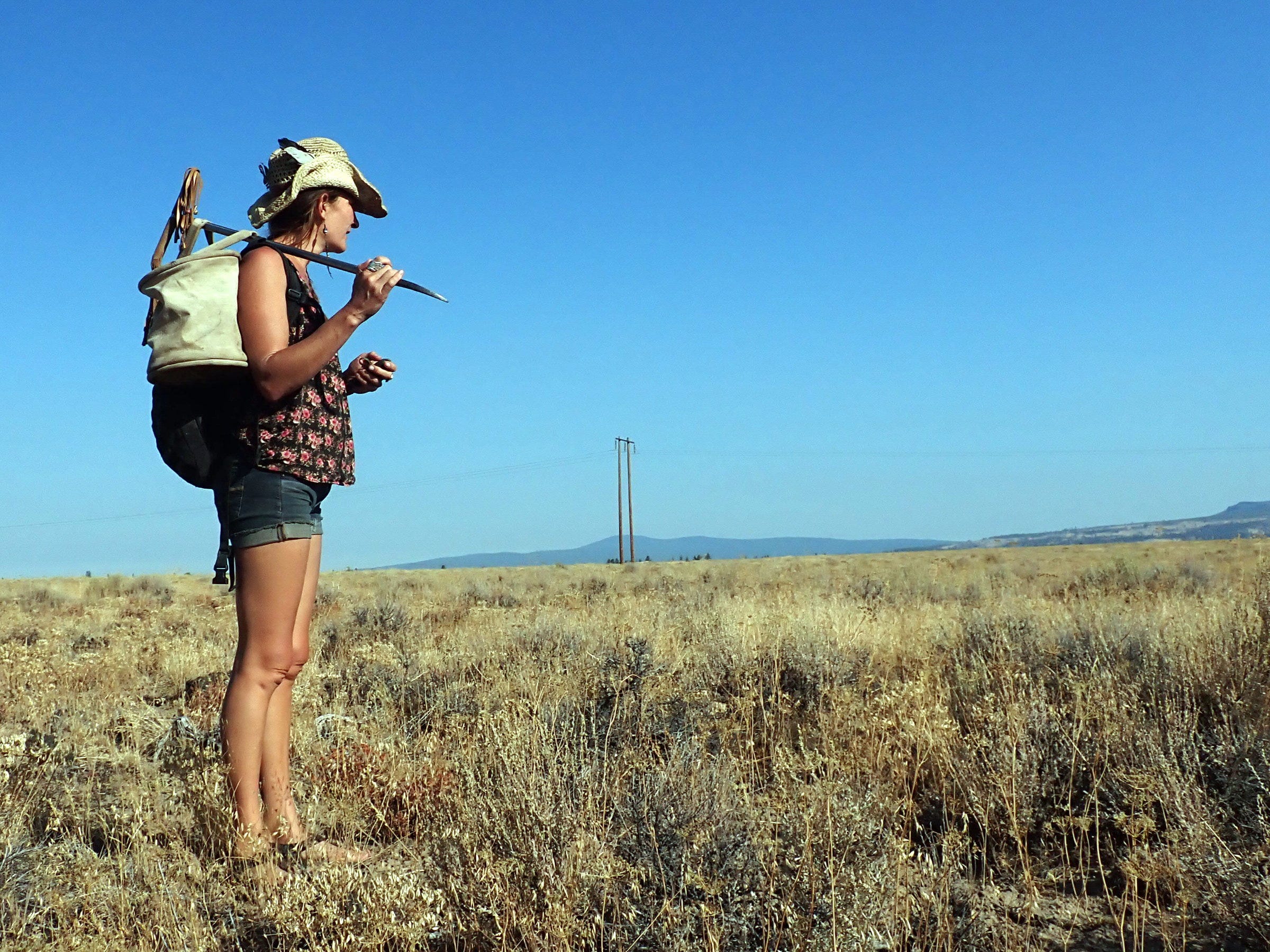
This post for paid subscribers is taken from my book, “Roadtripping at the End of the World.” It’s a lightly edited transcript of an interview Nikki Hill in July 2019 on the subject of wildtending.
Kollibri terre Sonnenblume: How do you define “wildtending”?
Nikki Hill: Wildtending is a relationship with the land, the plants, the animals, in which you are tending for increased abundance and health.
Kollibri: “Tending” being particular activities?
Nikki: Yeah, particular activities. The way in which you’re interacting with the world. So if you’re out harvesting things, you’re harvesting at a proper time that would be beneficial for increasing the abundance of that plant later, rather than decreasing. Or you’re doing it at a time when things are seeding. Or you are burying canes to make more shrubs if it’s berry bushes. Those are examples.
Kollibri: So you’re doing things to the landscape directly?
Nikki: Yes, it’s a very human-level, individual-level activity.
Kollibri: And community level too?
Nikki: Community level too, with all the individuals involved having that focus, that understanding and that relating.
Kollibri: Examples of people who have engaged in wildtending are Native Americans on the North American continent, in the western half, specifically.
Nikki: Yes. A lot of nomadic, hunter-gatherer tribes.
Kollibri: How is wildtending different than what we think of as hunting-gathering?
Nikki: The tending part comes in where people were not just hunting and gathering things. The tending part is all the other activities they were doing so they had something to hunt and to gather. Like planting seeds. It’s not often talked about that I know of, carrying seeds—even in reading different stories about how cultures and different tribes operated—but it was a big part of people’s lives.
Kollibri: What you’re saying is that people weren’t just harvesting, for example, berries, and eating them; they were planting berries too?
Nikki: Yes. In different ways. There was just this attention and understanding that your actions have an effect. So maybe you’re eating a bunch of berries and then you’re pooping in a place where you know they’ll grow. Simple things like that. Other times you are actually making an effort to collect seeds and carry them to another place where there’s not the foods you would like. So you’re planting new gardens and spreading the plants that way. So that wherever you’re walking in your life, there is food for you to eat. You’re increasing that abundance.
An example of what we see of that today is the Amazon rain forest. There’s different researchers who have come to see that parts of the Amazon were actually planted gardens. They’re a food forest, a very old one that we consider wilderness today. That’s part of what I’ve been learning here in the Great Basin, in the West, is that what we consider wilderness there was actually from centuries of planting. From people walking around with these seeds, with this awareness, with this relationship of increasing abundance of the things they relied on, in the places that they walked. Today we see that as wilderness. The fabric of our Great Basin desert had an influence from people. A larger influence than people [now] understand.
Kollibri: Right. Charles Mann, the guy who wrote 1491 and 1493, talks about this. In the Midwest, the prairies were expanded to enlarge the Buffalo’s range by having regular fires. So they were working not just on the individual plants but entire landscapes. That’s wildtending too.
Nikki: Absolutely. That’s one you hear more of. People talk about fire a lot. It’s a larger scale kind of picture. In some ways that one gets a lot of focus, and I’m not saying it shouldn’t, but it’s familiar to be doing things on a large scale. But I still think it was smaller scale than a lot of “management” projects we see today. Where we come up with an idea about what’s good for one part of forest and that becomes policy. And then that’s done throughout all the forests whether or not it makes sense, even in that region. There’s some sort of mentality about that scale that we’re still working with. But yeah, fire was definitely an example of wildtending.
Kollibri: And then moving plants from one area to another?
Nikki: Yes. That’s more where the day-to-day relationship comes in because it’s not like it was on a massive scale all at once, like you’re tilling a field and then planting. It was happening just as a way of walking, as a part of your movement, you were carrying seeds and planting them. You’re digging roots and you’re planting seeds.
